
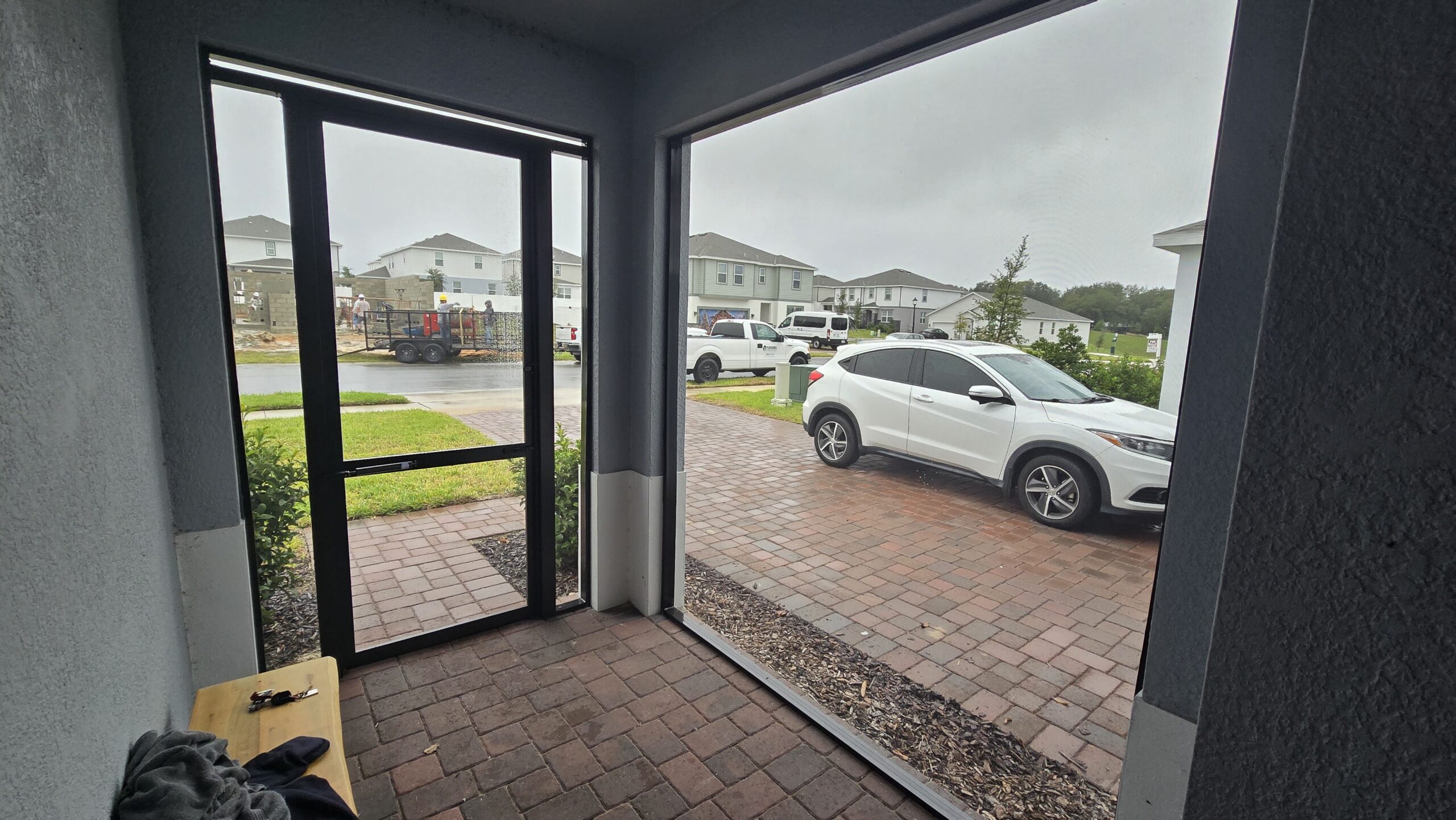
One torn screen panel is easy to notice. Figuring out whether it’s a small repair or the beginning of a bigger project takes a closer look.
If your aluminum frame is structurally sound and the screens are wearing out, rescreening may be enough. If the enclosure has damaged framing, failing connections, or a layout that no longer works for your home, it’s time to discuss repairs or replacement with a contractor.
The key is separating the condition of the screen from the condition of the structure holding it. They don’t necessarily need replacing at the same time.
At A1 Aluminum, our rescreening services in Clermont replace worn screening while retaining a suitable existing enclosure.
Here’s how to start thinking through your options.
Repair, Rescreen, or Replace: What’s the Difference?
These terms can sound interchangeable when you’re requesting quotes. They describe different scopes of work.
| Option | What It Involves | When to Consider It |
|---|---|---|
| Individual panel replacement | Replacing screening in specific openings. | Damage is limited and the surrounding screening remains in good condition. |
| Full rescreening | Replacing screening throughout the existing enclosure. | Screens are deteriorating across multiple areas, but the structure remains suitable. |
| Structural repair or replacement | Repairing or replacing framing and related components. | Structural damage, connection problems, or design changes require more than new mesh. |
A contractor’s inspection should confirm which approach fits your enclosure. A photo of a torn panel usually won’t tell the whole story.
When Replacing a Few Screen Panels Makes Sense
Sometimes, the problem really is limited to one spot.
A branch may have damaged a panel, or a pet may have scratched through screening near the door. If the remaining mesh is holding up well and the frame is sound, replacing the affected panels may be a reasonable choice.
Before deciding, look beyond the obvious tear:
- Are neighboring panels also fraying or separating at the edges?
- Is screening pulling out of several openings?
- Have you already replaced multiple panels recently?
- Does the door close properly, or are there gaps around it?
A small opening can let insects inside, but new mesh won’t fix a gap beneath a door. Having the surrounding components checked helps address the actual entry points.
When a Full Rescreen Is Worth Considering
A full rescreen becomes more appealing when deterioration is spread throughout the enclosure.
You might notice several tears, sagging panels, or screening that appears increasingly brittle. Florida’s sun and weather exposure can affect screen longevity, and the material’s quality matters. Manufacturer Phifer discusses fading, brittleness, tearing, and sagging in its guide to screen quality and durability.
The practical question is whether another isolated repair will solve your problem for a meaningful amount of time.
If you keep replacing panels while older ones continue to fail, ask for a full-rescreen quote alongside the repair estimate. Comparing both scopes gives you a clearer picture than approving another repair without considering the rest.
Rescreening is also an opportunity to discuss what frustrated you about the original screen. Were tiny insects still getting through? Did pets repeatedly damage the lower panels? Those details can help guide material selection.
When New Screens Won’t Solve the Problem
Fresh screening can improve an enclosure’s appearance. It cannot correct damaged aluminum framing or failing structural connections.
Have a contractor evaluate concerns such as:
- Bent, cracked, or visibly displaced frame members.
- Connections that appear loose or separated.
- Deterioration around fasteners or attachment points.
- A structure that has shifted after a storm.
- Doors that no longer align with their openings.
These observations don’t automatically mean the entire enclosure needs replacing. They mean the structure needs evaluation before choosing a screen-only project.
Replacement may also make sense when your plans have changed. Perhaps you’re expanding the pool deck, changing access to the backyard, or looking for a different enclosure layout. Discuss the new design before investing in a full rescreen of the existing structure.
Explore A1 Aluminum’s custom pool cage options if your project involves a larger transformation.
Can You Choose a Different Screen When Rescreening?
Yes. Rescreening can be a chance to change materials, provided the selected product is appropriate for the enclosure and its openings. Start with the problem you want to solve.
For Tiny Insects
Fine-mesh products are designed to address smaller pests. For example, Phifer’s 20×20 no-see-um screening is intended to help exclude small flying insects that may pass through more open screening.
For Damage From Pets
Pet-resistant products use more durable materials to help resist scratching and punctures. Phifer’s PetScreen is one example. Pet-resistant screening should still be treated as screening, rather than a secure containment barrier.
For Everyday Pool and Patio Use
Ask about screening specifically designed for enclosure applications and the size of your openings. Compare samples when possible. Visibility, airflow, insect protection, durability, and price all deserve a place in the conversation.
Confirm product availability and suitability with your installer before settling on a particular material.
What Should a Rescreening Quote Include?
The total price matters, but so does knowing what you’re buying. Ask your contractor to identify:
- Which panels are being replaced, including roof panels.
- The screen manufacturer and product.
- Whether spline replacement is included.
- Any recommended door, hardware, or fastener work.
- How discovered frame damage would be handled.
- The applicable material and workmanship warranty terms.
Two estimates can look very different because they cover different work. A clearly written scope makes comparison much easier.
Also ask whether the existing structure is suitable for rescreening. That question should come before choosing an upgraded mesh.
Frequently Asked Questions
Can you rescreen a pool enclosure without replacing the aluminum frame?
Yes, when the existing frame and its connections are suitable to remain in service. Rescreening replaces the mesh within the enclosure. Structural repairs, if needed, should be identified separately.
Is rescreening cheaper than replacing a pool cage?
Rescreening generally costs less when the existing structure can stay, because it avoids replacing the entire enclosure. Significant frame repairs or other additional work can change the comparison, so request a quote based on the enclosure’s actual condition.
Should I replace all my pool screens at once?
Consider a full rescreen when deterioration affects multiple areas or individual repairs have become frequent. If damage is isolated and the surrounding screening remains in good condition, replacing selected panels may be enough.
Will rescreening make my pool cage stronger?
New mesh replaces worn screening, but it does not establish that the aluminum structure is stronger or meets a particular wind rating. Ask your contractor to evaluate structural concerns separately.
How long does pool enclosure screening last in Florida?
Screen lifespan varies with the material, sun exposure, installation, maintenance, and physical damage. Rather than replacing screening based only on its age, have it checked for brittleness, fraying, tears, and loose panels.
Rescreening and Enclosure Projects in Central Florida
A1 Aluminum serves homeowners in Clermont, Minneola, Groveland, Montverde, Winter Garden, Horizon West, Windermere, Ocoee, Orlando, and surrounding Central Florida communities.
Whether you need fresh screening or want to explore a custom screen enclosure in Orlando, the starting point is understanding your existing space and what you want to change.
Tired of Looking Through Torn Screens?
Let’s take a look at what your enclosure needs. We’ll help you explore rescreening or a new enclosure based on its condition and what you want from your backyard.